

An emergency fund is money set aside for the unexpected: a job loss, a medical bill not covered by insurance, a slow business quarter or an urgent home repair. It is the first building block of any financial plan, because without it a single bad month can push a family or a small business into expensive debt.
1. How much should you keep?
A common rule of thumb is three to six months of essential expenses for salaried households, and six to twelve months for self-employed people and business owners whose income varies. Essential expenses include rent or EMI, groceries, school fees, insurance premiums, utilities and transport, not lifestyle spending.
For a business, keep a separate reserve that covers fixed costs such as salaries, rent and loan instalments for a few months. Never mix the business reserve with the family fund.
2. Where to keep it
An emergency fund must be safe and quickly available. Returns come second.
- A savings account or a sweep-in fixed deposit for the first month or two of expenses
- Short-term fixed deposits that can be broken with a small penalty
- Liquid or overnight mutual funds for part of the balance, understanding that they are market-linked and not guaranteed
- Avoid equity funds, long lock-in products and property for emergency money
Our fixed deposit guide explains how FD interest is taxed and how premature withdrawal works.
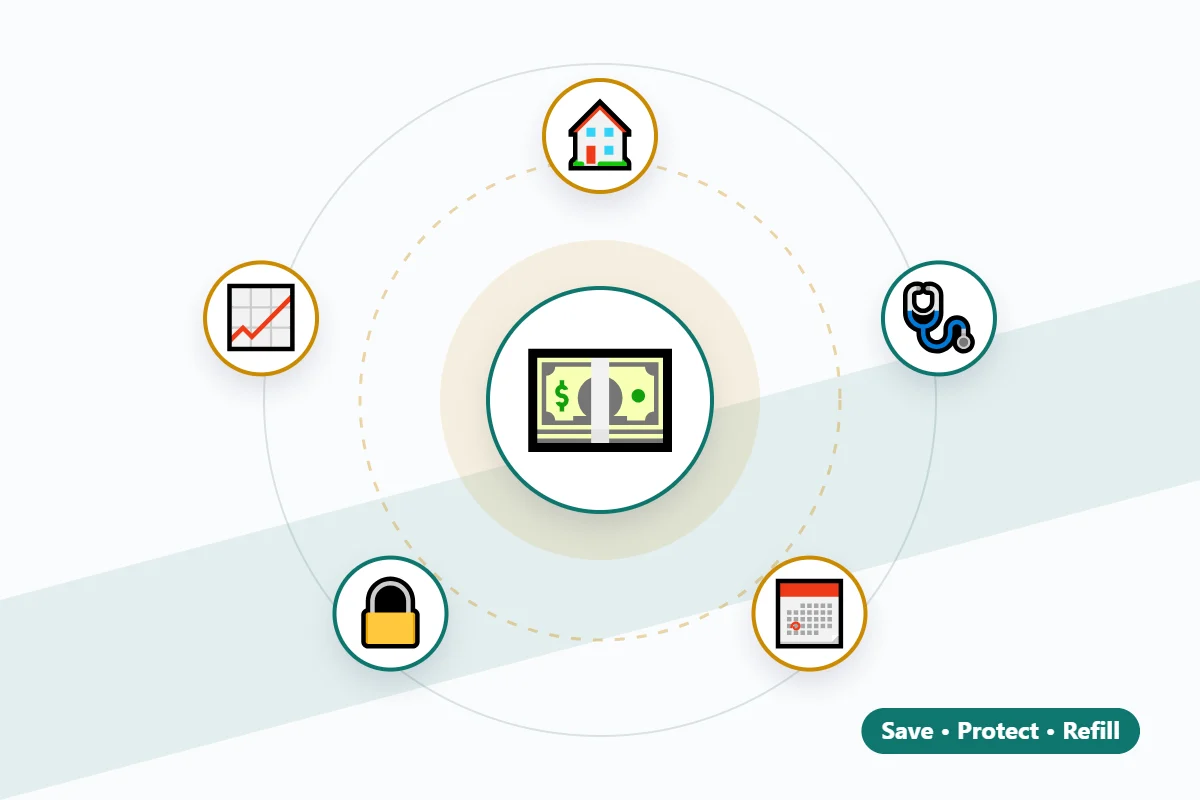
3. Emergency fund, insurance and credit work together
An emergency fund is not a substitute for insurance. A serious hospitalisation can exceed any reasonable savings, so a good health policy is essential; see our family insurance checklist. Similarly, a pre-approved credit line can be a backup, but borrowing should be the last option, not the first.
4. Build it step by step
- Calculate one month of essential expenses
- Set an automatic monthly transfer on salary day
- Put bonuses, tax refunds and windfalls into the fund until the target is reached
- Refill the fund as soon as possible after using it
- Review the target once a year or when expenses change
5. Getting help
ATTPL Finance helps families and businesses plan savings, insurance and loans together. For business cash-flow systems, payroll and expense tracking, ATTPL HRMS can reduce manual work. For a discussion about your requirement, contact ATTPL HOLDCO or call toll-free 1800-890-0815.
Frequently asked questions
Should I invest my emergency fund in stocks?
No. Emergency money must be available without loss when needed; equity values can fall sharply at the same time as an emergency.
Can a credit card replace an emergency fund?
It can bridge a few days, but card interest is high. Use savings first and borrowing only as a backup.
Do business owners need a separate emergency fund?
Yes. Keep one reserve for the household and another for the business, so a business problem does not empty family savings.
Sources
This article is general information, not professional advice. Rules, rates and schemes change; please check the official sources and consult a qualified professional.
Related reading: Protect your family further by updating nominees: nomination guide for bank accounts, insurance and investments.




Pingback: NPS and PPF: Retirement Planning Basics for Salaried and Self-Employed People - ATTPL Finance